Filing an Income Tax Return can be confusing even if your only regular income is your salary. You have received your Form 16 from your employer but you still need to check your income, tax deducted, bank interest and other details before you file your return.
The process for most salaried taxpayers is pretty straightforward once you have the right documents and select the right ITR form.
This guide includesthe documents required, which ITR form may be applicable, how to check your tax details and how to complete e-verification on ITR filing for salaried employees of India.
Who should file an ITR as a salaried employee?
A salaried employee may need to file an income tax return based on their income and other circumstances. Salary is only one part of the calculation. Interest income, house property income, capital gains and other income can also affect the return.
For AY 2026-27, the income earned in FY 2025-26 will be reported in the relevant ITR. Depending on the type of income and the taxpayer’s situation, the Income Tax Department has different forms.
If you are not sure whether you need to file or not, then check your total income and the conditions applicable to your case before selecting an ITR form.
Which ITR form should a salaried employee use?
One of the first steps for ITR filing for salaried employees is the right selection of the form. The form will depend on your income sources and other information.
ITR-1 for salaried employees
A resident individual who is not ordinarily resident and has total income up to ₹50 lakh from eligible sources can use ITR-1 or Sahaj.
These sources can include for AY 2026-27:
- Salary or pension
- One or two house properties, subject to the conditions of the form
- Interest and other eligible income
- Agricultural income up to ₹5,000
- Long-term capital gains under Section 112A up to ₹1.25 lakh
However, ITR-1 cannot be used in several situations. For example, it cannot be used by a person who has short-term capital gains, is a company director, holds unlisted equity shares, has certain foreign assets or income, or has total income above ₹50 lakh.
ITR-2 for salaried employees
If a person is not able to use ITR-1 and has no income from business or profession, then he will need ITR-2.
For example, if you are an individual with income from salary and capital gains, from more than two house properties or other cases where ITR-1 does not apply, you can use ITR-2. It can also apply if the total income is more than Rs 50 lakh.
ITR-3 and ITR-4
If you have salary income in addition to business or professional income, another ITR form may be applicable.
ITR-3 is used by individuals and HUFs having income from business or profession and not eligible for ITR-1, ITR-2 or ITR-4. ITR-4 may be applicable to eligible resident individuals, HUFs(Hindu Undivided Family) and firms using presumptive taxation provisions under section 44AD, 44ADA or 44AE subject to the applicable conditions.
Documents needed for ITR filing for salaried employees
Keep your documents ready before starting the return. This can help you compare the information entered in the ITR with the records available with your employer and the Income Tax Department.
Common documents include:
- Form 16 issued by your employer
- PAN and Aadhaar details
- Bank account details
- Form 26AS
- Annual Information Statement (AIS)
- Salary slips, where required
- Details of interest income
- Details of house property income, if applicable
- Details of eligible deductions and investments
- Capital gains statements, if applicable
Form 26AS mainly provides tax-related information such as TDS and TCS. AIS can contain wider information, including SFT information, tax payments, demand or refund details and other information available to the department.
How to file ITR for salaried employees online
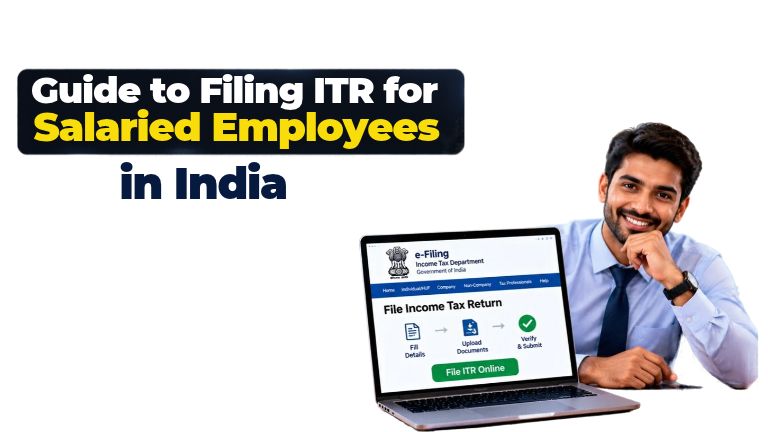
Once your documents are ready, you can file your return through the Income Tax e-Filing portal.
Step 1: Keep your income details ready
Start with Form 16 and check your salary, TDS and other details. Then compare them with your AIS and Form 26AS.
If you find a difference, check the underlying transaction before submitting your return.
Step 2: Select the appropriate assessment year
Income Tax on income earned in FY 2025-26 is to be calculated in AY 2026-27. The Income Tax Department has confirmed that income tax filing for FY 2025-26 is done under AY 2026-27 returns.
Step 3: Select the correct ITR form
Select ITR-1 or ITR-2 or any other applicable form as per your income and situation. Just because you are a salaried employee, do not file ITR-1.
Step 4: Check your pre-filled information
The portal may offer pre-filled details. Cross-check these details with your Form 16, AIS, Form 26AS and other records.
Step 5: Check your tax regime
For AY 2026-27, the new tax regime is the default regime for eligible individual taxpayers. In a non-business case, an eligible taxpayer can choose the old tax regime directly in the ITR. The two regimes have different tax rates, deductions and exemptions.
Check which regime applies to your situation before submitting the return.
Step 6: Check tax payable or refund
After entering the required details, review the tax calculation. If tax is payable, complete the required payment before submitting the return.
If excess tax has already been paid, the return may show a refund amount based on the final calculation.
Step 7: Submit and e-Verify your ITR
After checking all details, submit the return and complete the required verification process.
Filing the return and verifying it are separate steps. Make sure the verification is completed within the applicable time.
Common mistakes in ITR filing for salaried employees
Even a simple salary return can contain errors. Before submitting your ITR, check these points:
- Do not rely only on Form 16.
- Compare TDS details with Form 26AS and AIS.
- Check interest earned from savings accounts and deposits.
- Report other taxable income where applicable.
- Select the correct ITR form.
- Check your bank account details.
- Review deductions before claiming them.
- Check the selected tax regime.
- Complete e-Verification after filing.
These checks can help you avoid errors that may lead to notices, incorrect tax calculations or delays in processing.
New tax regime vs old tax regime for salaried employees
The tax regime can affect your final tax liability. For AY 2026-27, the new tax regime is the default regime for eligible taxpayers, while eligible taxpayers can opt for the old regime in applicable non-business cases.
The new regime has different slab rates and fewer deductions compared with the old regime. The old regime continues to provide for various deductions and exemptions, subject to the applicable conditions.
Do not choose a regime only because your employer selected one for TDS purposes. Check the figures in your final ITR and select the regime applicable to your circumstances.
What if you make a mistake after filing?
Errors might occur even when you have submitted your return. In case of any error found in ITR for AY 2026-27, you will be able to submit a revised return as long as it comes under the time limit.
Income Tax Department has clarified that, starting from AY 2026-27, a revised return can be submitted until the end of the concerned assessment year, provided certain criteria are met beyond 31 December.
If you have already received a notice or the issue involves complex income, it is better to check the applicable provision before making another filing.
Conclusion
Filing ITR Filing for salaried employees is easy if you have the required documents, choose the right ITR form and verify your income and tax details before filing your return. Check your Form 16, AIS and Form 26AS thoroughly, opt for the relevant tax regime, and ensure that all incomes and deductions are correctly reported.
Complete e- verification within the time frame as prescribed after filing your return. If you’re not sure about your ITR form or tax position, get professional help before you lodge it.
Need help with filing ITR? MY LEGAL BUSINESS LLP can help you with accurate and hassle-free income tax return filing. Contact our team today.
FAQs
1. Which ITR form is generally used by salaried employees?
Eligible resident individuals with total income up to ₹50 lakh may be able to use ITR-1, subject to the conditions prescribed by the Income Tax Department. If you are not eligible for ITR-1 and do not have business or professional income, ITR-2 may apply.
2. Is Form 16 enough to file an ITR?
Form 16 provides important salary and TDS information, but it may not cover all your income. You should also check AIS, Form 26AS, bank interest and other applicable income before filing.
3. Can a salaried employee choose the old tax regime?
Yes, eligible taxpayers can opt out of the default new tax regime and choose the old tax regime, subject to the applicable rules. For non-business cases, the choice can be made directly in the ITR.
4. What is AIS in income tax?
AIS stands for Annual Information Statement. It can show information such as TDS, specified financial transactions, tax payments, refunds and other information reported to the Income Tax Department.
5. What should I check before submitting my ITR?
Check your Form 16, AIS and Form 26AS, along with bank interest and other income. You should also confirm your ITR form, tax regime, deductions, bank details and final tax calculation before submission.
ALSO READ
Income Tax Refund Delay: Reasons, Status & What to Do
How to Apply for FSSAI License Registration in India
ITR Filing For Founders & Startups