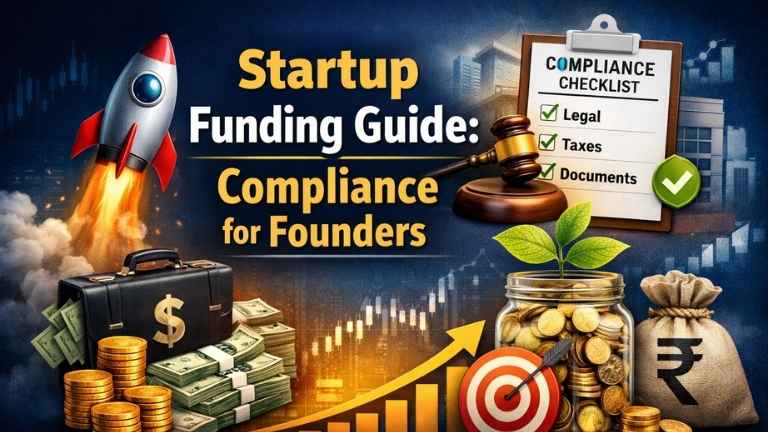
Raising funds for a startup in India is not just about a great pitch deck or strong traction anymore. Today’s investors are heavily vetting legal, financial and regulatory compliance prior to putting capital to work.
Even a good startup can lose investor confidence if its statutory records are not in order or governance is weak. Start-ups need to make sure their houses are in order, their corporate structure is clean, transparent and investor-ready before they start looking for funding as per the provisions of the Companies Act, 2013.
The Indian startup ecosystem has grown up. Venture Capital (VC), Angel Investors and Private Equity companies now undertake a comprehensive Legal Due Diligence (LDD) prior to execution of term sheets.
Investors verify:
- MCA compliance status
- Director KYC
- Shareholding pattern
- Tax filings
- Litigation exposure
Non-compliance may result in:
- Reduced valuation
- Delayed deal closure
- Investor-imposed conditions
- Complete deal rejection
Funding is not just capital infusion it is governance entry.
What Investors Review Before Investing
While conducting due diligence, investors examine:
✔ Corporate Records
- Memorandum of Association (MOA)
- Articles of Association (AOA)
- Incorporation documents
✔ Statutory Registers
- Register of Members
- Register of Directors
- Share transfer records
✔ MCA Filings
- AOC-4
- MGT-7
- DIR-3 KYC
- INC-20A
✔ Financial Records
- Audited financial statements
- GST returns
- Income tax returns
✔ Contracts & IP
- Founder agreements
- Employment contracts
- Trademark registrations
And if these documents are missing or inconsistent, investors see risk.
Ownership and Control
Select an appropriate entity type structure
For institutional funding, a Private Limited Company is the best option as it has a structured governance in place as per the Companies Act, 2013.
Why investors prefer Private Limited:
- Clear shareholding pattern
- Limited liability protection
- Ease of share transfer
- Structured board governance
Startups operating as LLP or sole proprietorship often need conversion before raising VC funding.
Check MOA & AOA
Your AOA must allow:
- Share transfer
- ESOP issuance
- Preferential allotment
- Investor rights
Outdated AOA can delay funding.
ROC & Secretarial Compliance
This is the point at which most startups fail.
Critical Compliance Checklist:
✔ First Board Meeting within 30 days
✔ Appointment of Auditor within 30 days
✔ Filing of INC-20A within 180 days
✔ Annual filing of AOC-4 & MGT-7
✔ DIR-3 KYC for directors
✔ Proper maintenance of minutes book
Non-filing results in penalties and MCA records showing “Defaulting Company.”
Investors always check MCA master data before proceeding.
Cap Table & Clean-Up the Shareholding
A messy cap table is a red flag.
Ensure:
- All shares properly allotted
- Share certificates issued
- Stamp duty paid (if applicable)
- No informal equity promises
- Updated Register of Members
Common Mistake:
Founders make an informal promise to give equity early employees or advisors, without putting it in writing. This creates disputes during funding.
Clarity on the cap table = investor confidence.
Financial & Tax Readiness
Investors evaluate financial discipline.
Required:
- Updated books of accounts
- Statutory audit completed
- GST returns filed (if applicable)
- TDS compliance
- Income Tax Return filing
Valuation can be impacted by off balance sheet tax liabilities, and these liabilities can also be used as negotiating terms for investors.
Robust financial reporting enhances credibility.
ESOP & Founder Agreements
Founder Agreement
A written agreement should define:
- Equity split
- Roles & responsibilities
- Vesting schedule
- Exit mechanism
Absence of vesting clauses discourages investors.
ESOP Structure
Investors expect:
- Proper ESOP pool
- Board & shareholder approval
- Compliance with Companies Act
Unstructured ESOP promises create dilution conflicts.
FEMA & Foreign Investment Compliance
If you plan to raise funding from foreign investors, compliance under FEMA and RBI reporting norms becomes critical.
Requirements include:
- Filing of FC-GPR
- Compliance with sectoral caps
- Compliance with the pricing norms
Non-observance could lead to punishment under the foreign exchange regulations.
Common Compliance Failures Among Startups
- Ignoring statutory registers
- Delaying annual filings
- No founder agreement
- Informal equity allocations
- Not protecting intellectual property
- Mixing personal & company expenses
These mistakes reduce investor trust.
How Compliance Improves Valuation
Investors price risk.
Low compliance = High risk = Lower valuation
Strong governance = Low risk = Better valuation
Compliance is not cost it is valuation insurance.
Why Choose My Legal Business LLP?
At My Legal Business LLP, we specialize in Startup Funding Compliance & Due Diligence Preparation.
Our Services Include:
✔ Pre-investment compliance audit
✔ ROC default rectification
✔ Cap table restructuring
✔ ESOP drafting & implementation
✔ FEMA & FDI compliance
✔ Due diligence documentation support
We understand startup realities and investor expectations. Our goal is not just compliance filing but making your business funding-ready.
Conclusion: Compliance is Your First Investor Pitch
In 2026, raising capital for startups is competitive. Investors fund teams that demonstrate:
- Governance discipline
- Transparent reporting
- Legal clarity
- Tax compliance
Before approaching investors, conduct a pre-investment compliance audit.
Fix:
- ROC defaults
- Cap table gaps
- Tax delays
- Documentation issues
When your company records are clean, negotiations become smoother and valuation stronger.
Startup growth begins with structured regulatory compliance.
Frequently Asked Questions (FAQs)
1.Is it possible to raise a funding if annual filings are still pending?
Technically, yes, but most investors want the ROC Default to be cleared before any money are released. Pending filings expose the buyer to risk and may stall a transaction.
2. Is the audit mandatory prior to funding?
Although not always legally required at the seed stage, a handful of investors will want financials that are audited. It creates trust and financial transparency is Verified.
3.What is the significance of INC-20A?
INC-20A is a declaration that the business has been started under the Companies Act, 2013. The company cannot trade, or take out loans without it.
4.What is legal due diligence?
It’s a systematic audit of compliance files, contracts, liabilities and governance. Investors conduct it to identify hidden risks before investing.
5. Do small startups also need compliance?
Yes, even early-stage startups must maintain basic ROC and tax compliance. Investors check statutory discipline regardless of company size.
6. Why is cap table accuracy important?
Having a correct cap table provides transparent information of shareholding and what % of company they are holding. Mistakes can result in disputes and undermine investor confidence.
7. Can LLP raise VC funding?
Potentially yes but rare for institutional funding. Most VCs recommend Private Limited company as it has defined governance structure and it is easy to dilute equity.
8. What if GST returns are not filed?
Non-filing is an indicator of tax risk and poor financial management. Funders may deflate or delay funding.
9. Is founder vesting clauses mandatory?
Not mandatory by law, but vesting is widely preferred by investors (and usually expected) as it helps ensure a long-term commitment from founders. It shields the company against early exits.
10. How long does due diligence take?
Typically 2-4 weeks depending on documentation readiness. Clean records can significantly speed up the funding process.
ALSO READ
Registration of Startup under DPIIT
Why Many Companies Face Penalty Notices Within First Year of Incorporation
Penalties Under Companies Act, 2013
Can One Person Be Director in Multiple Companies
Conversion of Sole Proprietorship into a Private Limited company