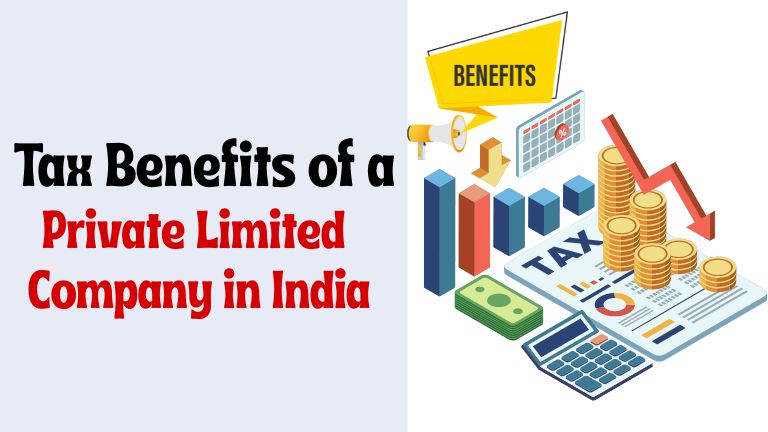
Most entrepreneurs consider the cost of registration only when they select the right form of doing business. Wrong move! As most businesses soon find out, the true financial cost is seen much later in the form of taxation.
Founders often register without even being aware of the principles of taxation applicable to various forms of doing business. Soon enough, liabilities increase, deductibles are missed, and there is poor planning, which leads to a private limited company stepping in.
Tax Advantages of a Private Limited Company in India are not just about getting lower tax rates but also getting access to deductions, startup benefits, compliance benefits, and greater financial credibility.
In case you plan to either register or restructure a private limited company, you need this guide.
Why Business Structure Directly Affects Tax Liability
It is widely believed that taxes are based on profits. That is not the case.
Taxation is determined by the business structure. The business structure determines how the income is taxed, what deductions are made, and whether it qualifies for tax incentives offered by the government.
As such, two companies making similar income will pay totally different taxes depending on their structures.
In most cases, sole proprietorships pay taxes through personal income tax. A private company operates differently since it has its own legal personality.
This is very important.
One is able to take advantage of structured deductions.
Understanding the Tax Benefits of a Private Limited Company in India
A private limited company enjoys several tax-related advantages under Indian corporate laws and the Income Tax Act.
Here are the major ones.
Lower Corporate Tax Rates
One of the biggest reasons startups choose this structure is the reduced corporate tax regime introduced for domestic companies.
Currently, eligible domestic private limited companies can opt for concessional tax rates under Section 115BAA of the Income Tax Act.
That means:
- Reduced base tax rate
- Predictable taxation
- Better retained earnings
- Improved cash flow management
For growing businesses, this creates breathing room during expansion stages.
Startup Tax Exemption Under Section 80-IAC
In case your business earns DPIIT certification through the Startup India program, then you are entitled to a tax exemption.
This is a great benefit.
Under this clause, startups get a tax deduction of 100% from their income over a period of three consecutive years within ten years of starting the business.
Deduction of Business Expenses
Private limited companies can claim a wide range of legitimate business expenses as deductions.
This includes:
- Office rent
- Employee salaries
- Internet and utility bills
- Professional fees
- Software subscriptions
- Marketing costs
- Travel expenses
- Equipment depreciation
The more organised your accounting becomes, the more efficient your tax planning gets.
Simple.
Better Tax Planning Opportunities for Founders
A private limited company gives founders more flexibility in structuring income.
That flexibility matters a lot once revenue increases.
Salary and Dividend Distribution
Directors can receive compensation through:
- Salary
- Bonuses
- Dividends
- Reimbursements
This helps balance personal taxation and company taxation more efficiently.
A smart structure often reduces unnecessary tax burdens legally.
Carry Forward of Losses
Business losses don’t always disappear.
Under certain conditions, private limited companies can carry forward losses and set them off against future profits. This becomes especially useful during the first few years when many startups operate at a loss.
It helps reduce future taxable income.
That means future savings.
Depreciation Benefits on Assets
Businesses spend heavily on infrastructure, technology, and machinery. The good part is that many of these assets qualify for depreciation deductions.
A private limited company can claim depreciation on:
- Computers
- Office furniture
- Vehicles
- Machinery
- Technical equipment
- Servers and hardware
This gradually reduces taxable profits while reflecting asset wear and tear.
For tech startups, this benefit becomes surprisingly valuable over time.
GST Advantages for Private Limited Companies
GST itself isn’t a direct tax benefit. Still, the structure helps businesses manage indirect taxation more effectively.
Here’s how.
Input Tax Credit
Registered companies can claim Input Tax Credit on eligible purchases used for business purposes.
That means GST paid on business expenses can often be adjusted against output liability.
This improves working capital.
Higher Business Credibility
Clients, vendors, and larger corporations usually prefer working with registered private limited companies because compliance systems are stronger.
This leads to:
- Easier vendor approvals
- Faster enterprise onboarding
- Better funding opportunities
- Improved financial documentation
Indirectly, these advantages support healthier tax and financial management.
Tax Benefits Available to Startups in India
The Indian government continues to push startup growth through various tax incentives.
Private limited companies usually become the preferred structure for accessing these schemes.
Angel Tax Relief
Eligible startups recognised by DPIIT can receive relief from Angel Tax provisions under Section 56(2)(viib).
This becomes important when raising external funding at higher valuations.
Without this exemption, taxation complications may arise during investment rounds.
ESOP Tax Planning
Employee Stock Option Plans work better under structured company frameworks.
Many startups use ESOPs to attract talent without increasing immediate salary expenses. Proper planning can also optimise tax implications for employees and founders.
That’s one reason investors prefer incorporated entities.
Corporate Tax Benefits Compared to Sole Proprietorship
Many freelance individuals and small business proprietors will have to deal with the decision at some point whether they should remain sole proprietors or transform themselves into private limited companies. In terms of tax considerations, however, there are differences between the two.
| Factor | Sole Proprietorship | Private Limited Company |
| Tax Structure | Personal slab rates | Corporate tax rates |
| Legal Identity | No separate entity | Separate legal entity |
| Funding Access | Limited | Stronger investor confidence |
| Tax Planning | Limited flexibility | Better structured planning |
| Startup Benefits | Restricted | Eligible for startup incentives |
For small businesses with growing revenue, the shift often becomes financially practical.
Common Tax Deductions Many Businesses Ignore
A surprising number of companies overpay taxes simply because they fail to track expenses properly.
Here are deductions businesses often miss:
Professional and Legal Fees
Payments made to:
- Chartered accountants
- Company secretaries
- Legal consultants
- Compliance professionals
can generally be claimed as business expenses.
Employee Welfare Expenses
Costs related to employee welfare may qualify as deductions, including:
- Training programmes
- Staff meals
- Team events
- Health benefits
Home Office Expenses
If directors or founders work remotely for company operations, a portion of internet, electricity, and workspace costs may sometimes be considered under legitimate business expenditure.
Documentation matters here.
Always maintain records.
Things You Must Do to Actually Enjoy These Tax Benefits
Many companies lose benefits because of poor compliance. That’s the harsh reality.
Tax planning only works when documentation stays clean.
Maintain Proper Accounting Records
You should maintain:
- Invoices
- Expense receipts
- Bank statements
- GST records
- Payroll documents
Without records, deductions become difficult during scrutiny.
File Returns on Time
The delay in filing leads to penalties as well as interest costs.
Further, certain tax rebates might not be available due to delayed filing.
Work With a Professional
A professional CA or tax expert will guide you in finding various deductions and structuring salaries.
It is money well spent.
Is a Private Limited Company the Right Choice for Tax Savings?
Not every business needs incorporation immediately.
But if you are:
- Planning to scale
- Seeking investors
- Building a startup
- Hiring employees
- Expanding nationally
- Looking for structured tax planning
Then a private limited company often becomes the smarter option.
The taxation advantages increase as business operations grow.
Small today. Bigger tomorrow.
That’s usually how it starts.
Conclusion:
The Tax Benefits of a Private Limited Company in India extend far beyond reduced corporate tax rates. You get better deduction opportunities, startup incentives, organised financial management, and stronger long-term planning flexibility.
More importantly, this structure prepares your business for growth.
If you’re serious about building a scalable company, don’t look at incorporation as just a legal formality. Think of it as a financial strategy.
Your next step?
Speak with a qualified company registration or tax professional and evaluate whether your current structure is helping your business grow or quietly increasing your tax burden.
MY LEGAL BUSINESS LLP is here to assist the founders, startup founders, and developing companies in India by providing professional assistance in incorporation of a company.
Frequently Asked Questions
What are the major tax benefits of a private limited company?
Some major tax benefits include lower tax rate for corporations, tax exemption at the time of startup, deductions for depreciation, allowable business expenses, etc.
Are there any exemptions from taxes available for startups that have registered a private limited company?
Yes, there are tax exemptions available as per Section 80-IAC for up to 100% deduction from profits for three successive years.
Which option is better for tax savings – Private Limited Company or Sole Proprietorship?
Most likely, private limited companies are more favourable options due to their taxation and deductions and ability to scale up.
Can I get input tax credit if my company is registered as a private limited company?
Generally, input tax credit is allowed under applicable GST provisions for eligible purchases made for business purposes.
Does a private limited company pay low taxes in India?
It is possible to choose a lower tax regime for eligible private limited companies in accordance with the provisions of the Indian Income Tax Act.
Appointment of Nominee Directors
Company registration process step by step
Section 8 company registration
Registration Process of Section 8 Company in India
How to Register an NGO on NGO Darpan