A Section 8 Company is a non-profit organization that formed with charitable causes like education, social welfare, protect the environment, research and community development. These companies operate for non-profit purpose, but they still have to follow rules and laws.
To maintain proper documentation is essential to ensure transparency, approvals from government authorities and to avoid penalties. These also includes the filings made with the Registrar of Companies (ROC), Income Tax authorities, and other regulatory bodies.
This blog explains the important compliances and timelines for Section 8 companies in simple and easy language.
What is a Section 8 Company?
A Section 8 Company is incorporated under Section 8 of the Companies Act, 2013. These companies are formed to promote charitable causes such as:
- Education
- Social welfare
- Environmental protection
- Charity and humanitarian activities
- Promotion of art, science, sports, and research
Like normal companies, Section 8 company cannot distribute profit among its members and it must be used only for its charitable objectives.
Why Compliance is important for Section 8 Companies
Compliance is crucial for a Section 8 company to function properly.
There are some reasons why compliance is vital.
- It helps a Section 8 Company to maintain its legal status.
- It ensures transparency and accountability within the company.
- The company must keep its government approvals and registrations upto date.
- A Section 8 Company needs to build trust among its donors and stakeholders through compliance.
- Compliances help the companies to avoid penalties and legal consequences
If a Section 8 company fails to comply with requirements it may face penalties. The company may also experience disqualification of its directors. In some cases, the company may even face cancellation of its Section 8 license.
Compliance is essential to prevent consequences and ensure the smooth operation of a Section 8 company.
Major Annual Compliance Requirements
Section 8 companies must comply with various annual filings and regulatory requirements.
Some major compliances include:
- Conduct Board Meetings
- Conduct Annual General Meeting (AGM)
- To file annual returns with ROC
- To maintain books of accounts
- To conduct statutory audit
- To file income tax returns
These compliances ensure transparency and proper governance.
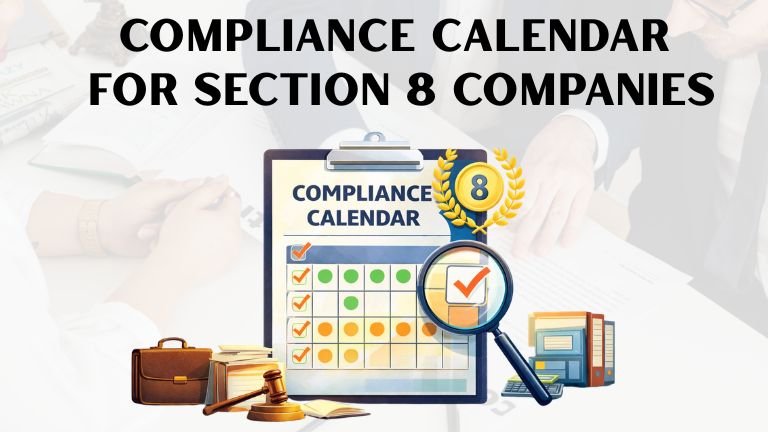
Compliance Calendar for Section 8 Companies
Below is a general compliance calendar for Section 8 companies in India:
| Compliance | Form | Due Date | |
| First Board Meeting | – | Must be held within 30 days of incorporation | |
| Board Meetings | – | At least 2 meetings every year | |
| Annual General Meeting (AGM) | – | Within 6 months from the end of financial year | |
| Financial Statements | AOC-4 | Within 30 days of AGM | |
| Annual Return | MGT-7 / MGT-7A | Within 60 days of AGM | |
| Income Tax Return | ITR-7 | As per Income Tax due date | |
| DIR-3 KYC for Directors | DIR-3 KYC | 30th September | |
Note: Due dates may change as per government notifications.
Event-Based Compliances
Apart from the compliances they have to comply every year, Section 8 companies also have to do some compliances when certain events happen.
These compliances are:
- When a new director is appointed or an old one resigns
- When there is a change in registered office
- When there is a change in object clause
- When a company issue or transfer of shares
- When a company alters a Memorandum or Articles of Association
The company needs to inform the Registrar of Companies about any changes they make within a prescribed time.
Income Tax and Other Regulatory Compliances
Section 8 companies have to follow additional laws too depending on in which activities they engage.
Some common compliances that a Section 8 Companies have to do include:
- Income Tax registrations such as 12A and 80G
- CSR compliance if receiving CSR funds
- FCRA registration for receiving foreign donations
- GST registration (if applicable)
These compliances help ensure legal operation and eligibility for benefits and funding.
Consequences of Non-Compliance
Failure to comply with legal requirements can result in serious consequences.
Possible penalties include:
- Monetary penalties and late filing fees
- Disqualification of directors
- Loss of tax exemptions
- Cancellation of Section 8 license
- Legal action by regulatory authorities
Therefore, timely compliance is very important for Section 8 companies.
Tips to Maintain Compliance Easily
Section 8 companies can follow certain practices to maintain compliance effectively.
Some useful tips include:
- To maintain proper books of accounts
- Keep track of compliance deadlines
- To conduct regular board meetings
- To appoint or engage professional advisors such as Company Secretaries or Chartered Accountants
- To maintain proper documentation and records
Following these practices helps ensure smooth operations and compliance.
Conclusion
Section 8 companies are formed to help people who’re in need and do good things for the community. To be honest and trustworthy, Section 8 companies have to do what the law says under the Companies Act and the Income Tax laws.
They have to fill out papers and send them in on time, so Section 8 companies can do their work without any trouble. This way Section 8 companies can achieve their goals. Make the world a better place for everyone, which is what Section 8 companies are all, about.
FAQs
1. Do Section 8 companies have to file returns every year?
Yes, Section 8 companies must file annual returns with the Registrar of Companies.
2. How many board meetings are needed for a Section 8 company?
A Section 8 company needs to hold at least two board meetings every year.
3. Do Section 8 companies need to get their accounts audited?
Yes, Section 8 companies need to get their accounts audited every year.
4. Do Section 8 companies need to file income tax returns?
Yes, Section 8 companies need to file their tax returns with the Income Tax Department in ITR-7.
5. What are the implications if a Section 8 company does not comply with the Registrar of Companies?
The Section 8 company may have to pay penalties or late fees. It may even face legal action, from the authorities.
ALSO READ
Who Can Start a Section 8 Company in India
How to Choose the Best Business Structure for Your Startup in 2026
Why Small Businesses Skip Trademark Registration in India
LLP Annual Compliance Checklist-Forms, Due Dates & Penalties